 English,
 Spanish,
 Polish


Free Consultation
630-932-9100

-

- Home
- Our Firm
- Practice Areas
- Divorce
- Alimony and Maintenance
- Child Support
- College Expenses
- Special Needs Children and Divorce
- Parental Responsibility / Custody
- Sole Custody vs. Joint Custody
- Parenting Plans and Visitation
- Child Relocation
- Property and Asset Division
- Retirement, 401k Accounts and Pensions
- Debt Division
- Post Decree Modifications
- Post Decree Enforcement and Contempt Hearings
- Dissolution of Arranged Marriages
- Tax Consequences and Divorce
- Uncontested Divorce
- Divorce Involving Mental Health Issues or Addictions
- Divorce and the Stay-at-Home Parent
- Divorce FAQs
- Family Law
- Personal Injury
- Motor Vehicle Accidents
- Auto Accidents
- Truck Accidents
- Amazon Delivery Driver Accidents
- Motorcycle Accidents
- Rideshare Accidents
- Pedestrian Accidents
- E-Bike/E-Scooter Accidents
- Boat Accidents
- Aviation Accidents
- Premises Liability
- Medical Malpractice
- Nursing Home Abuse
- Wrongful Death
- Construction Site Accidents
- Other Serious Injuries
- Personal Injury FAQs
- Workers' Compensation
- Construction Accidents and Injuries
- Warehouse and Factory Worker Injuries
- Healthcare Worker Injuries
- Office Worker Injuries
- Shipping and Trucker Worker Injuries
- Types of Workers' Compensation Injuries
- Back and Neck injuries
- Repetitive Stress Injuries
- Arm and Shoulder Injuries
- Knee Injuries
- Occupational Diseases
- Specific Accident Cases
- Who We Represent
- Workers' Comp Death Benefits
- Filing a Workers' Comp Claim
- How to Qualify for Benefits Under Workers' Comp
- Vocational Rehabilitation Rights
- Workers' Compensation FAQs
- Criminal Defense
- Immigration
- Bankruptcy
- Estate Planning
- Real Estate
- Divorce
- Success Stories
- Testimonials
- Media
- Blog
- Contact Us
Recent Blog Posts
One Killed in Fatal Metra-Car Accident in Woodstock
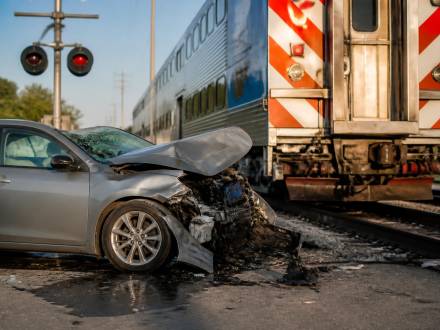 An inbound Union Pacific Northwest Line in Woodstock, Illinois killed a 19-year-old recently after her car was struck. The Metra train struck the young victim's car after it became stuck at a grade crossing located at the bottom of a hill. Authorities believe snow and icy conditions contributed to the fatal car accident. Car Accidents in Illinois Illinois has the 3rd highest number of accidents at highway-railroad crossings in the country. According to the Illinois Commerce Commission, approximately 80 individuals die each year on and around railroad tracks in the state. In 1976 there were 800 accidents and over 96 people died at public grade crossings. This number has been steadily decreasing since the implementation of the Illinois Operation Lifesaver program in 1976. The program looks to educate the public in order to protect people from the dangers of railroad crossings and trains. In 2012, this number fell to 89 accidents; 25 deaths; and 34 serious injuries. Despite the decreasing number of accidents and fatalities at public grades, the risk of injury is still high. Over 300 million vehicles cross railroad tracks every day across the country; 270 people were killed in highway-railroad grade crossings accidents in 2012, and over 400 people were killed when trespassing on railroad property in the same year. The danger of being involved in a vehicle-train accident is even greater in the six-county Chicago area where 73 percent of the state's train-vehicle collisions occur. The most troubling statistic, however, is that more than half of these accidents occur when the railroad crossing is displaying its active warning devices (i.e. the lights, gates, and bells are engaged). Drivers either mistime their crossing or willfully ignore the warning signs. This is exceedingly problematic, considering one is 40 times more likely to die in an accident with a train than with a car. Trains, despite all of their safety features, still need the length of at least 18 football fields in order to come to a full stop. When approaching a train crossing, either on foot or in a vehicle, one must observe the utmost caution. Depending on the circumstances, the ability to receive compensation for your injuries or property damage due to a vehicle-train accident may be difficult. Contact Our Experienced Personal Injury Attorneys If you are in an accident with a train, Mevorah & Giglio Law Offices can help. Our skilled DuPage County personal injury attorneys have significant experience and are prepared to offer you assistance today. Reach out to us for a consultation on your case. Call 630-932-9100.
Immigration Detainers: A Federal Overreach?
 Very often, Immigration and Customs Enforcement (ICE) solicits assistance from state and local police agencies in attempts to catch up with undocumented immigrants. When this occurs, a person may be placed under an immigration detainer. This practice has been condemned by activists as extrajudicial, and various states are in the process of eliminating them. However, detainers are still used in many other states.
How Detainers Work
If a state or local law enforcement agency (LEA) receives a detainer request, it is intended to advise the local LEA that they have someone in custody that is of interest to ICE. It is also intended to serve as notice that ICE would like to take custody of the person after the local LEA has exhausted their time with them. Sometimes, ICE requests that the LEA extend their hold on the person if possible. If the detainer is complied with, ICE is then able to take custody of the person after the LEA’s time with them expires.
This is not, despite belief to the contrary, a requirement. State agencies are not bound by law to obey requests for detainers, and indeed, the LEA may not hold anyone beyond 48 hours unless they are arrested. Detainers may also only be placed on non-U.S. citizens; any U.S. citizen who finds him or herself under detainer may have a case for false imprisonment.
Pushback from State Agencies
While the system has no doubt contributed to the arrest of a number of undocumented immigrants, it has also created very real problems for the people it is supposed to protect. U.S. citizens have been held on immigration detainers before, which is a violation of the Fourth Amendment—one cannot be held in detention while a court tries to figure out if the detention is appropriate or not.
Allegations of racial profiling have also been made; it is alleged in several suits currently pending that ICE officials unjustly held United States citizens or immigrants with documentation, usually of Latino origin, on detainer solely to ‘run checks’ or investigate their immigration status. This is unacceptable under both the Fourth Amendment and the Fourteenth.
Also, certain state agencies have simply stopped cooperating with ICE detainers, citing the excessive drain on their own, far more limited resources and personnel. On his way out of office in January, departing governor Pat Quinn issued an executive order prohibiting state law enforcement agencies from complying with ICE detainers. Such an order, while somewhat controversial, is entirely within the scope of the governor’s power.
Governor Quinn argued that one of the main issues with the detainer system is that it discourages the undocumented from interacting with police—even if they are not culpable in the crime in question—because they fear deportation. The argument can be made that if the undocumented community is entirely estranged from law enforcement, it may not only adversely affect crime rates within the community, but it can also make it harder to reach the undocumented in non-criminal matters as well.
Get Help From a Professional
If you or a loved one have been the subject of an immigration detainer—rightly or wrongly—having a good attorney on your side can make all the difference. The Chicagoland immigration attorneys at Mevorah & Giglio Law Offices have years of experience in these matters, and we are ready to help you. Contact us today at 630-932-9100.
Child Vaccination Debate: Should Parents Be Held Liable for Not Vaccinating Their Children?
 As a parent, you make decisions for your child on a daily basis. Whether you are the sole custodian of your child, or share joint custody, there are a lot of decisions that need to be made with regards to your child’s education, upbringing, health, etc. But what happens when your decisions regarding your child’s upbringing and health have a negative impact on others? This is the question at the center of the child vaccination debate, especially in light of the measles outbreak at Disneyland where 52 cases of infection originated.
One Parent’s Decision Can Pose a Threat to the Rest
At the center of this epidemic is the debate of whether there should be criminal or civil charges for not vaccinating your child, and for the child infecting another child who later dies as a result. The reasoning behind criminal and/or civil liability attaching to these parents is that their decision for raising their child poses a significant threat to the public as a whole.
Illinois Traffic Fatalities Reach New Low
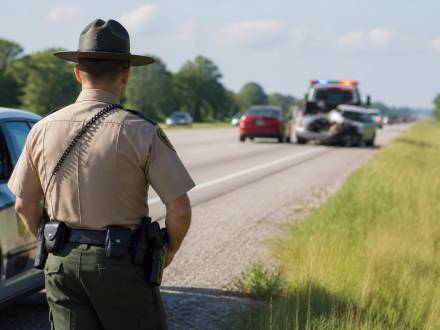 The Illinois Department of Transportation released its preliminary traffic data and the numbers indicate that the state posted its lowest number of traffic accident deaths since 1921. Last year the state only had 910 traffic fatalities and this was the sixth year straight where the number of traffic deaths fell below 1,000. In 2013, there were 999 traffic deaths. This is quite the improvement compared to numbers from 10 and 20 years ago. In 2004 there were 1,355 deaths and in 1994 there were 1,554 traffic deaths. Winter May Play a Part in Fatality Decrease The Department of Transportation credited the drop in fatalities to "the exceptionally harsh winter and reduction in travel" and the fact that cars are being made to be increasingly safer. While winter conditions make for unsafe driving conditions, the bad weather discourages drivers from going on the road in the first place. A study by the University of Michigan's Transportation Research Institute found in 2014 that traffic deaths were down by 30 percent. In the study, the decrease in Illinois was specifically attributed the 2014 ban on cell phone usage in construction zones and school zones, the graduated license program and safer roads. Illinois' "Drive Now. Text Later" campaign is also believed to have had a positive impact on driver safety. The 2010 program focused on informing Illinois drivers that it is in fact illegal to text while on a state toll road and on the dangers of distracted driving. In 2010, over 3,000 people were killed in car accidents that involved a distracted driver (typically cell phone distraction). However, in 2011 the number dropped to 1,100 and in 2012 cell phone distractions were the main distraction in only 600 traffic crashes. Another factor that is believed to have helped decrease the number of fatalities is newly increased highway speed limits. This may seem counter-intuitive, but many believe that higher speed limits means drivers travel at more similar speeds, thus reducing the number of accidents. Reach Out to Our Attorneys for Help While fatalities are steadily decreasing, traffic accidents remain a danger for pedestrians, passengers, and other drivers. If you or a loved one was hurt or killed in a traffic accident, please contact an experienced DuPage County car accident attorney at Mevorah & Giglio Law Offices. You may be entitled to compensation for your injuries, suffering, property damage and medical bills. It is imperative you act quickly to speak with an attorney and learn how to file a personal injury case, as the statute of limitations in Illinois provides only a short period of time in which you can pursue a claim. As such, we invite you to reach out to us today and learn how we can be of assistance to you during this time.
10 Boulder Hill Students Hurt in Bus Accident
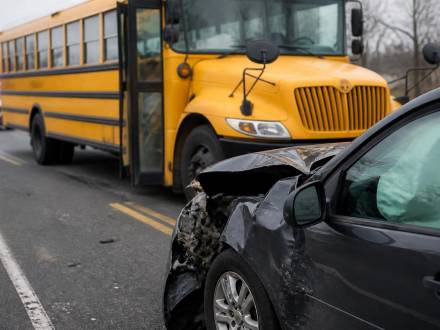 An early morning crash between a car and a school bus in the Chicago suburbs sent 10 elementary school children to the hospital for minor injuries, treatment and evaluation. The accident was caused by a driver who ran a traffic signal and hit the bus. School Bus Accidents School bus accidents, also known as school-transportation-related accidents, are those that either directly or indirectly involve a school bus or non-school bus acting as a bus that is transporting children to or from school or school-related activities. According to the National Traffic Highway Safety Bureau, there have been 348,253 fatal motor vehicle accidents since 2003. Of those, 1,222 were school-transportation related. Fortunately, this is a relatively low percentage of accident fatalities (.35 percent). Nonetheless, these accidents are scary because they involve young children. Between 2003 and 2012, 89 of these crashes killed at least one occupant who was in the bus, and 58 percent of these fatal crashes involved another vehicle. From 2003 to 2012, a total of 174 school-age children died in school-transportation-related crashes; 55 were occupants of school transportation vehicles and 119 were pedestrians. However, more than 119 pedestrians, under the age of 19, have died in accidents involving school-related transportation accidents since 2003. Sixty-five percent of these school age children were killed by school buses. Statistics show, however, that school children are overall safer in a school bus than in a passenger vehicle. This is because school buses are designed to better sustain damage from an accident because of their size, height, reinforced sides, and higher crush standards. The drawback to this is that while students within the bus are safe, pedestrians and other drivers are at greater risk if they are hit by a school bus. While 8 percent of the fatalities in the school-transportation-related accidents were those traveling in the school bus, more than 71 percent of those who died were occupants in the other vehicles. Student pedestrians are particularly at risk between the times of 7 a.m. and 8 a.m., and 3 p.m. and 4 p.m. These are the most common times school age children are walking to and from school. Contact Our Experienced Bus Accident Attorneys If you or loved one has been hurt or killed in an accident with a school bus, either as a pedestrian, driver of another vehicle, or passenger in another vehicle, you may be entitled to damages that cover pain and suffering, personal injury, wrongful death, medical expenses, lost wages, and rehabilitation costs (amongst other costs). Please contact an experienced DuPage County personal injury attorney at Mevorah & Giglio Law Offices to review your case.
Same-Sex Marriage: What is the Law and Religious Exemptions?
 On February 21, 2014, Illinois became the 16th state in the United States to start offering marriage licenses to same-sex couples after passing the Religious Freedom and Marriage Fairness Act (RFMFA). This provided same-sex couples the opportunity to finally be able to enjoy the privileges and rights allotted to married couples within the state, which extended to all facets of life such as tax benefits, inheritance rights, and other estate planning matters.
For many, this freedom to marry offered a considerable change to their current life. Before the passing of the Religious Freedom and Marriage Fairness Act, and before the destruction of the Defense Of Marriage Act (DOMA), only civil unions were offered to same-sex couples, which provided acknowledgement of the union but little to no legal benefits. With marriage equality now becoming a legal standard, same-sex couples are curious as to their newfound rights and privileges.
Human Trafficking: Its Costs and Victims
 While most people are unaware of the extent and scope of human trafficking, the sad fact is that it persists to an unacceptable degree and in countries most people believe are free from crime of this nature. And very often, its victims are victimized long after they are released from whatever situation prompted their unwilling flight.
Trafficking Defined
Human trafficking is defined as a form of slavery in which people "profit from the exploitation and control of others." Most people think of sexual slavery, but trafficking victims are made to labor in many industries against their will. Some people conflate trafficking with people smuggling, but smuggling people is consensual, while human trafficking is not. Trafficking victims are essentially objects to the trafficker, devoid of autonomy.
The International Labor Organization (ILO) estimates that approximately 21 million people are victims of human trafficking each year, and over half of whom are female. Most of them come from poor, urban areas in Asia and Eastern Europe, such as Cambodia and Poland. The United States is a destination and transit country for victims, meaning that they are brought here to be exploited.
U.S. law puts trafficking victims into three categories: (1) children under 18 coerced into the sex industry, (2) adults induced into the sex industry by fraud or coercion, and (3) children and adults induced to provide other labor services by fraud or coercion. While there is no distinction between these categories in terms of immigration, it does influence how and when victims may be entitled to compensation.
T Visas: Escape
There is help for victims of trafficking, however, if they know where to look. The United States passed the Victims of Trafficking and Violence Protection Act in 2000, which created the T and U visas. T visas are designed to help human trafficking victims remain in the United States to assist law enforcement in the apprehension of traffickers. While a T visa is not an immigrant visa, it is enough, in many instances, to allow a victim to extricate themselves from their controller, and get his or her life back on track.
An individual is eligible for a T visa if he or she:
Latest Illinois Drunk Driving Statistics Released
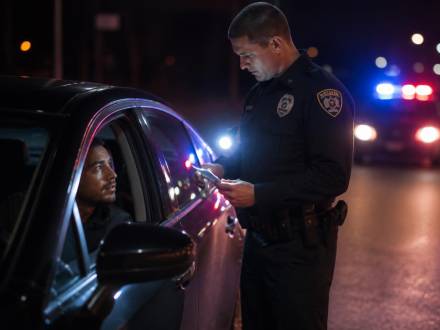 Despite a decrease in fatalities, drunk driving is still a serious problem in Illinois. However, there has been a distinct effort to crack down on drunk driving by law enforcement in hopes of decreasing the number of car accidents. Various non-profit groups in Illinois have released their most recent data on the state of driving under the influence in the state. Cyber Drive Illinois released its facts from 2013, and showed that 317 out of 991 total fatal crashes were alcohol-related. One statistic, illustrating the increased crackdown on drunk driving, is that 93 percent of drivers arrested for a DUI lost their driving privileges. Furthermore, 86 percent of all drivers arrested for DUIs were first-time offenders. The Alliance Against Intoxicated Motorists also released its most recent data from 2013. It found that 35 percent of accidents involving a drunk driver resulted in a fatality. The top 10 counties in Illinois for driving under the influence arrests are as follows:
Underage Drinking and Parental Liability
 Parents have a defined duty to care for and provide their children with food, clothing, education, and a hospitable environment to live. A parent must also protect his or her children from harm by teaching them about the importance of following laws and regulations that are created for the purpose of child protection.
One of the laws that seems to be most flouted by minors is the National Minimum Drinking Age Act which, in 1984, set the minimum drinking age at a person’s 21st birthday. This is a federal law which states comply with and make it illegal to allow persons under 21 the ability to purchase and consume alcoholic beverages (except in the cases of religious observance).
Underage Drinking Statistics
In 2013, it was estimated that nine million minors, between the ages of 12 and 20, reported to have consumed alcohol in a 30-day period. According to the National Survey on Drug Use and Health, the percentage of alcohol consumption increases with age, finding that between the ages of 12 and 16, the percentage of alcohol consumption increased by 18 percent. Between 16 years old and 20 years old, the percentage of alcohol consumption increased by 52 percent.
Ridesharing: Illinois' New Uber Law
 Earlier in January, former Governor Quinn signed into law the new regulations for ride sharing services, such as Uber and Lyft, to operate in the state of Illinois. Unfortunately, the new laws benefit the ridesharing companies and not consumers in the event of an accident or injury. These regulations were a hard fought battle and were initially vetoed by Governor Quinn who bought into Uber's argument that the rules were too strict and would have prevented the company from bringing the popular services to the entire state. However, the version of the regulation that was eventually passed into law is a watered down compromise that may leave victims of Uber accidents unsatisfied when seeking recovery. Version of the Bill The original version of the Ridesharing Arrangements and Consumer Protection Act (H.B. 4075 (2014)) would have leveled the playing field between ridesharing companies and the existing taxicab community. It would have required Uber drivers to meet the same licensing requirements if they work more than 18 hours per week. It would have also required the same stricter insurance minimums and background checks that apply to taxi drivers to apply to Uber drivers as well. These measures would have additionally ensured consumers are being driven by fully insured individuals who meet safety and criminal background checks. The bill passed the state House and Senate easily, but the Governor made it clear early on that he would veto the bill. As such, lawmakers had to return to the drawing board to come up with compromise regulations that create a fraction of the safety and insurance requirements the vetoed law provided. The new law requires the driver and the companies to share the burden of the minimum insurance coverage: $1 million in personal injury, death, and property damage claims. The new law also requires a background check and licensing requirements for the drivers and sets standards for the ridesharing companies to provide vehicles with disability access. Individuals with more than three moving violations or one major violation during the last three years could not become drivers. Sex offenders and people with a DUI on their record in the last seven years are not allowed to be ridesharing drivers either. Furthermore, ridesharing companies will now be required to disclose fare increases during surge pricing. While this is a step forward, the new law does raise some concerns. By allowing the minimum insurance coverage to be met by a driver's personal insurance policy, the company's commercial insurance policy, or a combination of the two, victims of Uber accidents are at risk of not receiving full compensation for their injuries. Prior to the new regulations, insurance companies were denying drivers' claims because the insurance company would say that Uber's commercial insurance should apply, not the driver's policy. The possibility that such an argument will be made still exists, regardless of the new laws. The vetoed version of the bill would have offered some much needed clarity and coverage. To quote the congressman who initially pushed for the stricter regulations: "As much as we love Uber and Lyft, for being innovative, good services, we have a responsibility to protect our constituents' safety." The end result is discouraging: victims and the drivers are not fully covered and will have their insurance claims denied—leaving both parties with astronomical bills or damages to cover out-of-pocket. Contact Our Experienced Accident Attorneys If you are in an accident involving an Uber driver or other rideshare company, contact one of our experienced DuPage County car accident attorneys. We will happily provide you with a consultation to discover how we can be of assistance. Reach out to Mevorah & Giglio Law Offices today for help.









Offices in 3 Convenient DuPage County Locations
Lombard
900 E. Roosevelt Road
Lombard, IL 60148
Phone: 630-932-9100
Fax: 630-932-9868
MAP & DIRECTIONS
Bloomingdale
134 N. Bloomingdale Road
Bloomingdale, IL 60108
Phone: 630-529-2400
Fax: 630-529-7630
MAP & DIRECTIONS
Naperville
Phone: 630-420-1000
By Appointment Only

 Make a Payment


